

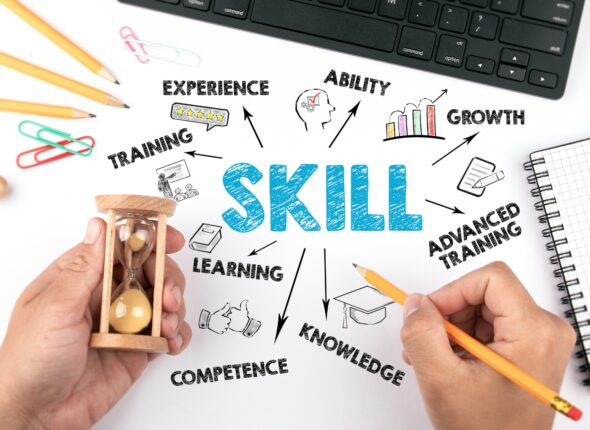
In today’s fast-changing world, traditional education alone is no longer enough to guarantee success. While academic knowledge builds a strong foundation, it is skill-based learning that truly prepares individuals for real-world challenges and career opportunities.
Skill-based learning focuses on practical abilities—what you can do rather than just what you know. From digital literacy and communication skills to technical expertise like coding, digital marketing, or AI tools, these competencies are directly aligned with industry needs. Employers today are increasingly looking for candidates who can adapt quickly, solve problems, and contribute from day one.
Another key advantage of skill-based learning is its relevance. Industries are evolving rapidly due to technology and globalization. New job roles are emerging while others are becoming obsolete. Skill-based education helps learners stay updated and future-ready by teaching current, in-demand skills that match market trends.
Moreover, it boosts confidence and independence. When learners acquire practical skills, they become more capable of handling real-life tasks, whether it’s building a project, managing a business, or freelancing. This not only enhances employability but also opens doors to entrepreneurship.
In conclusion, skill-based learning bridges the gap between education and employment. It empowers individuals with the tools they need to succeed in a competitive world, making it an essential part of modern education.